
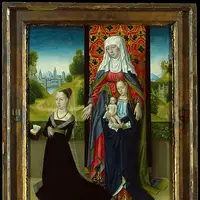




























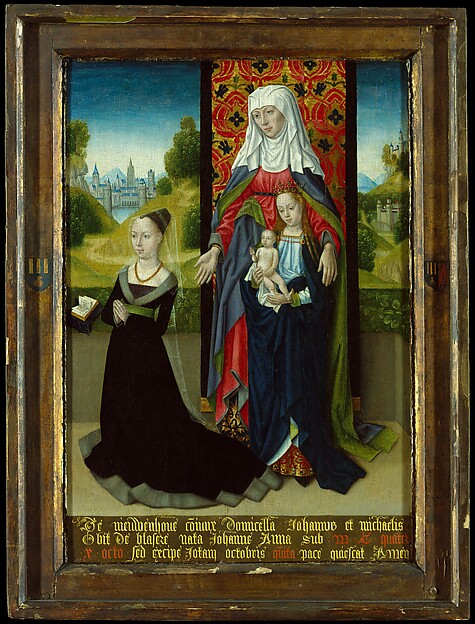
This artwork, created by the Master of the Saint Ursula Legend, depicts a family scene rich in spiritual symbolism. The painting, from the late 15th century and displayed at The Metropolitan Museum of Art in New York, features the Virgin, her Child, and Saint Anne, presenting Anna van Nieuwenhove. The soft, warm colors of the painting create a welcoming and serene atmosphere that draws viewers in. Each character is carefully positioned to convey intricate relationships, emphasizing the bond between generations and highlighting the values important to society at that time.
The delicate brushwork used by the artist accentuates the figures' gentle expressions and fine details, allowing each person’s emotions to shine through. The background, showing lush greenery and distant architecture, suggests a setting of peace and divine order. This setting invites viewers to reflect on their own connections with family and spiritual beliefs.
By focusing on religious figures and family, the painting communicates a message of devotion and the importance of family ties. The Virgin Mary, who has always been a symbol of purity and love in Christian art, is shown with her Child, expressing the eternal bond between a mother and her child. Likewise, Saint Anne, the mother of the Virgin, represents the strength and wisdom passed down through generations.
This piece is a prime example of Netherlandish art from the late 15th century. During this era, artists paid great attention to detail and incorporated religious themes that blended everyday life with spiritual elements. If you look closely, you might see how these elements reflect the values of devotion and family, inviting contemplation on both personal and broader human connections.