
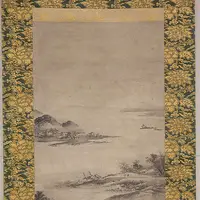

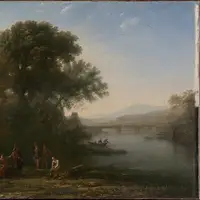

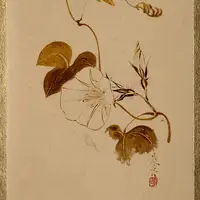


















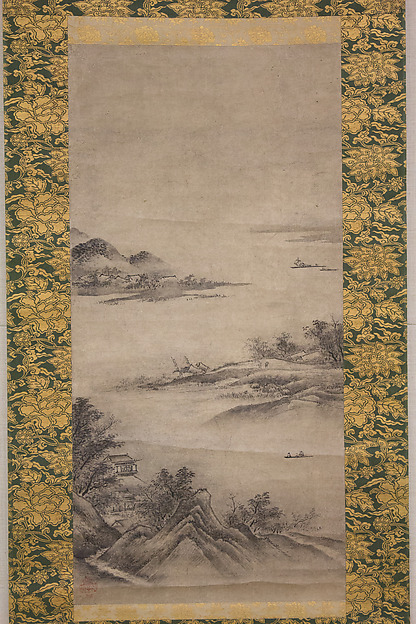
Kanō Motonobu's "River Landscape in Evening" is a serene depiction of nature, capturing the beauty of a Japanese evening by the river. Created in the 16th century, this painting uses delicate ink on paper, presenting a tranquil scenery typical of the Muromachi period. The artist, Motonobu, was renowned for his role in the Kanō school, which greatly influenced Japanese art. This school trained many painters during the Edo period, and Motonobu’s style has left a lasting impact on Japanese art.
In "River Landscape in Evening," the viewer can see small boats gently floating on the water, which suggests a harmony between humans and nature. This connection is a key theme of art from that era. His choice of minimal colors and simple composition helps to bring out the themes of peace and balance that define the painting. The mountains in the distance and the scattered trees create a sense of depth, inviting viewers on a visual journey through the landscape.
Furthermore, hanging scrolls like this were often used for meditation and reflection. As viewers examine the painting closely, they are invited to experience the stillness and quiet that evening offers. This focus on serene, understated beauty captures the Japanese aesthetic of finding joy in simplicity and quiet moments.
Motonobu’s brushwork is both careful and expressive, allowing those who look at it to feel the tranquility of nature. His influence on the Kanō school made it the dominant style for many years. Today, this painting is part of the collection at The Metropolitan Museum of Art in New York, where it continues to inspire and calm those who view it.