



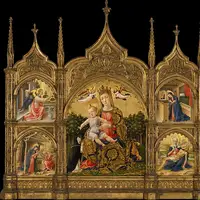




































The painting, created by Ippolito Scarsella around 1609, features the Virgin Mary at its center. She is surrounded by angels, who symbolize her importance in the Christian faith. Below her, several saints are praying, which shows their deep devotion to her. The use of dark and soft colors creates a serious atmosphere, emphasizing the gravity of the moment. The figures wear robes in muted tones that reflect their solemnity and respect. This composition represents the artist's desire to convey a message of hope and faith to the audience. Scarsellino's choice of oil on copper gives the painting a unique texture and depth, making it stand out among other works. The scene not only represents a critical religious moment but also highlights the close connection between the saints and the Virgin. This work holds significant importance in art history, as it illustrates the Baroque style, which focuses on emotion and spirituality. By placing Mary above the saints, Scarsellino successfully emphasizes her role as a mediator between believers and God. This idea was a common theme during this period, as many artists sought to inspire devotion through their works. The painting, which is now part of the collection at The Metropolitan Museum of Art in New York, attracts visitors interested in both religion and art history. If you visit the museum, you might find yourself drawn to the delicate details and rich colors, which make this artwork both moving and beautiful.
B1 · Intermediate · 239 words · ~1 min
Scarsellino (Ippolito Scarsella) · ca. 1609 · Oil on copper · The Met
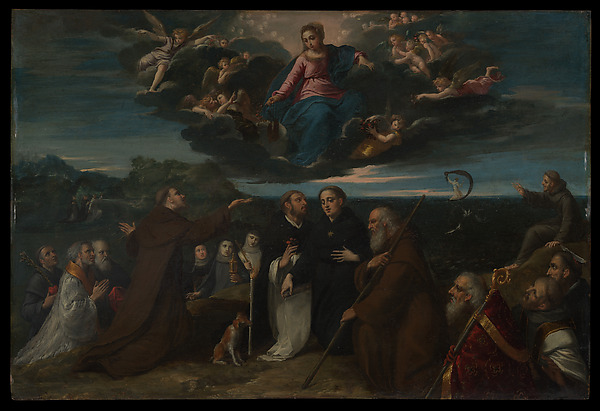
The Virgin Adored by Saints
Word notebook · B1
Tap a highlighted word in the text, or study the list below.
- symbolize
- to represent something, often through a specific image or idea.
- devotion
- deep love and loyalty towards someone or something.
- gravity
- the seriousness or importance of a situation.
- solidity
- the state of being firm and stable.
- mediator
- someone who helps different parties come together, especially in a conflict.
- Baroque
- a style in art and architecture that emphasizes emotion, tension, and grandeur.
- texture
- the feel or appearance of a surface, often describing how it looks visually.
- audience
- a group of people who watch or listen to a performance or presentation.