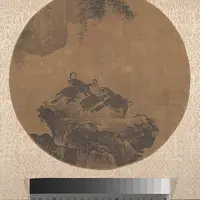

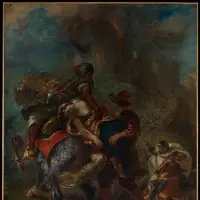
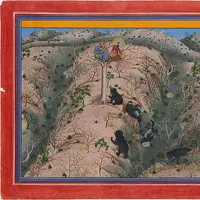
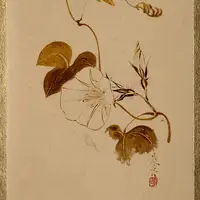








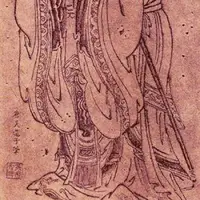

Kawanabe Kyōsai painted 'Buffalo and Herdsman' in the late 1880s, around 1887. This beautiful artwork features a group of buffalo standing in a serene river. The herdsman, who is a young man, manages the buffalo with great care. He appears joyful, which suggests that he has built a strong bond with these animals. The trees in the background create a sense of depth and add to the peaceful landscape. Kyōsai uses soft colors, which help create a calm and tranquil mood. This piece reflects the importance of agriculture in rural Japan during the Meiji period, a time when the country underwent great modernization and change. Buffalo have always been vital for farming, as they help plow the fields and carry heavy loads. They symbolize strength and hard work, which are important qualities in farming life. Moreover, the composition of the painting shows harmony between humans and nature, highlighting the artist's deep respect for both. Many people who observe this artwork feel a connection to the past, where farming was essential for survival. This connection shows the significance of preserving traditions and the relationship we have with nature. Overall, Kyōsai’s work is a reminder of the beauty in simplicity and the value of agricultural life.
B1 · Intermediate · 204 words · ~1 min
Kawanabe Kyōsai 河鍋暁斎 · ca. 1887 · Album leaf; ink and color on silk · The Met
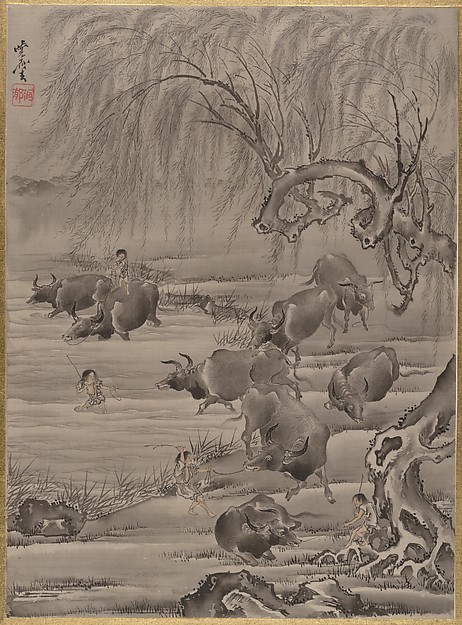
Buffalo and Herdsman
Word notebook · B1
Tap a highlighted word in the text, or study the list below.
- serene
- calm and peaceful
- bond
- a strong connection between people or animals
- harmonious
- working well together without conflict
- symbolize
- to represent something
- vital
- very important or necessary
- tranquil
- free from disturbance; calm
- depth
- the distance from the top to the bottom; here it refers to how three-dimensional the painting looks.
Comprehension check · B1
Finished reading? See how much stuck.
1.When did Kawanabe Kyōsai paint 'Buffalo and Herdsman'?
2.What do buffalo symbolize in this artwork?
3.Where is 'Buffalo and Herdsman' currently held?