




























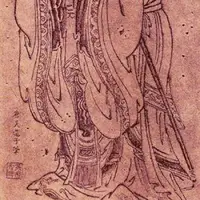



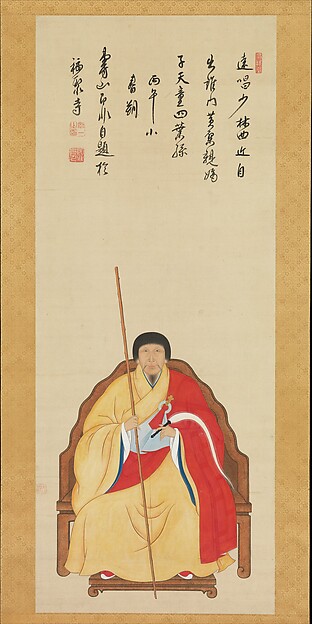
The painting titled 'Portrait of the Ōbaku Zen Monk Jifei Ruyi' by Kita Genki captures a significant moment in Japanese art during the Edo period. Created in 1666, it shows a serene monk who embodies peace and wisdom. His colorful robe is striking but also calming, using vibrant red and blue to enhance his quiet strength. The soft colors reflect the ideals of simplicity and harmony that were important at the time. The simple background allows the viewer to focus on the monk's expression and posture, which convey deep thoughts. The bamboo stick in his hand symbolizes guidance and teaching for those who seek wisdom.
Kita Genki, who was active from 1664 to 1698, is known for his ability to blend ink and color on silk, creating a stunning effect in his hanging scrolls. This particular artwork invites viewers to reflect and find tranquility within themselves, an important concept in Zen Buddhism. The Edo period was a time when art and culture flourished in Japan, emphasizing beauty in everyday life. This painting belongs to the collection of The Metropolitan Museum of Art in New York, where many visitors have admired it. If you ever visit the museum, you can see how Genki's art continues to inspire and encourage peace today.