
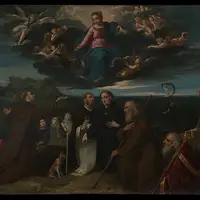


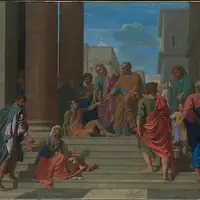






















In this painting, Saint Zenobius is trying to bring a dead child back to life. Many people surround them, showing different emotions like sadness and hope. The saint, who has dedicated his life to helping others, is dressed in elaborate robes that suggest his importance and connection to God. The child lies on a bright cloth, symbolizing innocence and the fragility of life. The bright colors, especially the blues and pinks, add to the painting’s emotional depth and beauty. Light shines on the figures, emphasizing their expressions and the gravity of the moment. The artist, Benozzo Gozzoli, has created this dramatic scene to convey themes of faith and miracles, which were important during the Renaissance. This era focused on human emotions and the importance of religious stories. If viewers look closely, they may notice how the surrounding characters reflect a mix of disbelief and support, which adds layers to the scene. Gozzoli, who worked in Florence and later in other Italian cities, has become known for his ability to capture human emotion. The painting, which is in the collection of The Metropolitan Museum of Art in New York, reminds viewers of the power of belief and the possibility of hope in difficult times. It tells us that miracles can happen when faith is strong, especially in moments of sorrow.
B1 · Intermediate · 219 words · ~1 min
Benozzo Gozzoli (Benozzo di Lese di Sandro) · · Tempera on wood · The Met
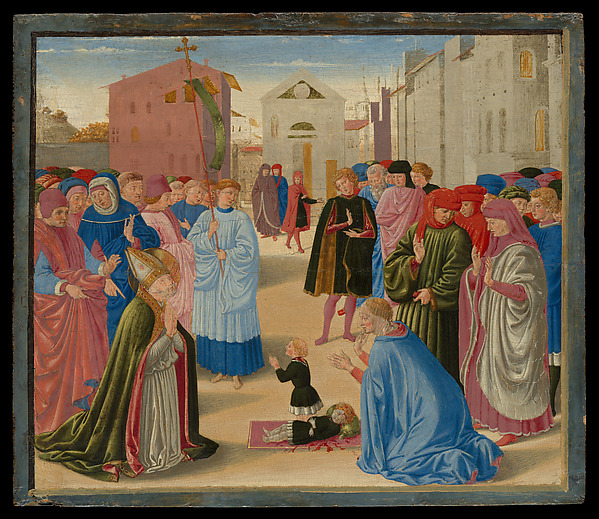
Saint Zenobius Resuscitating a Dead Child
Word notebook · B1
Tap a highlighted word in the text, or study the list below.
- elaborate
- in great detail or complex
- fragility
- the quality of being delicate or weak
- gravity
- seriousness or importance
- difficult
- hard to do or deal with
- importance
- the quality of being significant or valuable
- dedicated
- devoted to a task or purpose
- support
- to help or assist someone
- emotion
- a strong feeling like sadness or happiness
Comprehension check · B1
Finished reading? See how much stuck.
1.What does Saint Zenobius hope to achieve in the painting?
2.What does the surrounding crowd show in their expressions?
3.Which era's focus is reflected in this painting?