

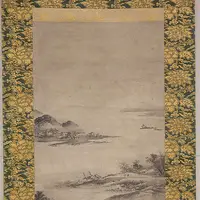





























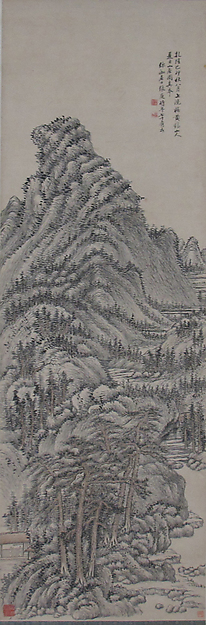
Landscape After Wang Meng is a beautiful painting by Zhang Geng, created in 1759 during the Qing dynasty. This artwork features large mountains that rise majestically, surrounded by dark trees, which are arranged in a harmonious way. The colors used in this painting are mainly dark greens and blacks, which create a calming atmosphere. The light sky contrasts with the dark mountains, emphasizing their height and beauty. The artist’s choice of simple lines and careful brushwork gives a sense of tranquility and balance. In Chinese culture, mountains symbolize strength and stability, representing the deep connection between nature and human life. If you look closely, you can see the mist that adds an air of mystery to the landscape. This painting has encouraged many viewers to reflect on the power of nature and its peacefulness. It is typical of the period when art was seen as a way to connect with the world around us. Zhang Geng, who was influenced by earlier masters like Wang Meng, sought to express his admiration for natural beauty through his work. Today, this painting is part of the collection at The Metropolitan Museum of Art in New York, where people come to admire its beauty and remember the rich cultural heritage of China. The painting, like many from the Qing dynasty, continues to inspire viewers, reminding us of the relationship between humanity and the environment.
B1 · Intermediate · 230 words · ~1 min
Zhang Geng · dated 1759 · Hanging scroll; ink and color on paper · The Met
Exploring Landscape After Wang Meng
Word notebook · B1
Tap a highlighted word in the text, or study the list below.
- harmonious
- pleasing and balanced in arrangement or design
- symbolize
- to represent or stand for something
- tranquility
- a state of calm and peace
- mist
- a thin fog that makes things look unclear
- influenced
- affected or changed by something or someone
- admiration
- a feeling of respect and approval
- heritage
- cultural background or traditions that are passed down
- beauty
- a quality that pleases the senses, especially sight
Comprehension check · B1
Finished reading? See how much stuck.
1.What does Zhang Geng's painting primarily feature?
2.What do mountains represent in Chinese culture according to the text?
3.Where can the painting Landscape After Wang Meng be found today?