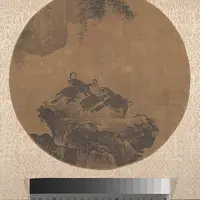










































The artwork 'Cranes in Marsh' is created by Kawanabe Kyōsai, a famous Japanese artist who lived from 1831 to 1889. In this beautiful painting, we see two cranes in a grassy marsh. The white crane stands tall and proud in the foreground, while a smaller dark crane searches diligently for food among the green grass. The colors in the artwork are soft and gentle, which creates a calm atmosphere. The round sun in the background adds warmth and light to the scene, making it even more pleasant. Cranes are important symbols in Japanese culture, representing good fortune and longevity, which means a long life. Kyōsai's work is a part of the Meiji period, a time from 1868 to 1912 when Japan was opening up to the world and changing rapidly. This painting shows the beauty of nature and the harmony between birds and their environment. Kyōsai has aimed to capture this peaceful moment in time, reflecting both admiration for nature and traditional Japanese values. If viewers look closely, they can appreciate the careful details of the cranes and their surroundings. This connection to nature can inspire people to preserve these beautiful places for future generations. Today, the painting is part of the collection at The Metropolitan Museum of Art in New York, where many admire Kyōsai’s talent.
B1 · Intermediate · 217 words · ~1 min
Kawanabe Kyōsai 河鍋暁斎 · ca. 1887 · Album leaf; ink and color on silk · The Met
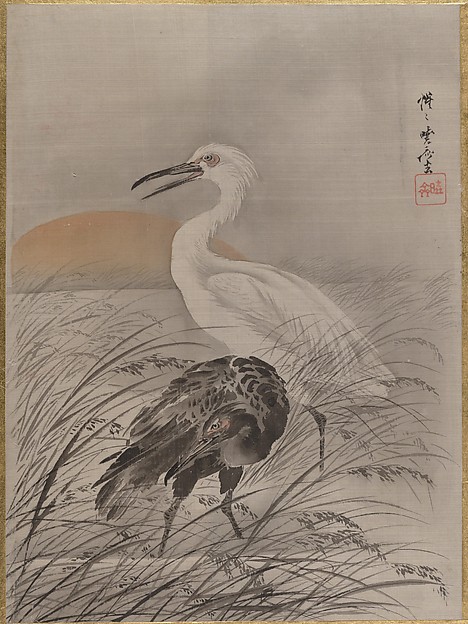
Cranes in Marsh by Kawanabe Kyōsai
Word notebook · B1
Tap a highlighted word in the text, or study the list below.
- longevity
- a long life
- diligently
- doing something with great effort and care
- atmosphere
- the feeling or mood of a place
- fortune
- good luck or chance
- collaboration
- working together with others
Comprehension check · B1
Finished reading? See how much stuck.
1.Who is the artist of 'Cranes in Marsh'?
2.What period does this painting belong to?
3.Where can this artwork be found today?