




























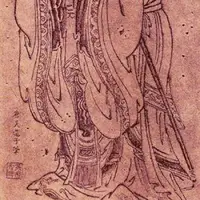



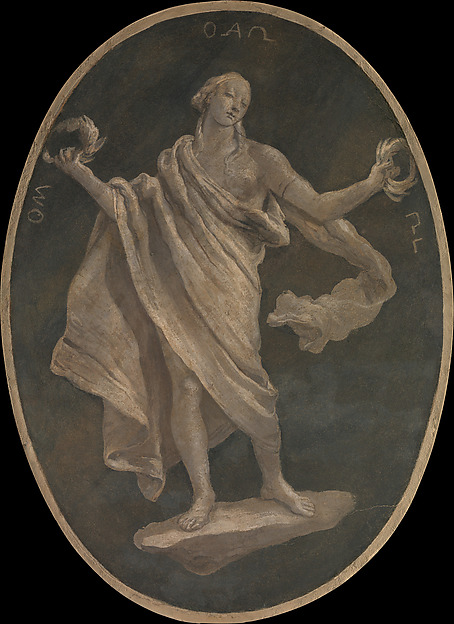
In the fresco painting 'Allegorical Figure Representing a Virtue,' created by Giovanni Battista Tiepolo in 1760, a powerful image of a woman likely symbolizes patriotism. She stands confidently with her arms wide open, which shows her strength and pride. The soft, flowing lines of her dress contrast effectively with the dark background, drawing the viewer’s eye directly to her vibrant figure. The bright, round items she holds also enhance this focus, suggesting positivity and impact. Tiepolo’s skillful use of light and color contributes to the painting's overall power, making the figure appear almost luminous and alive. This artwork reflects the Rococo style, known for its ornamental and elaborate details, which Tiepolo has mastered throughout his career. Since he worked in various countries, including Italy, Germany, and Spain, he has developed a unique style that blends different influences. His works often celebrate virtues and ideals, capturing the spirit of the 18th century. Importantly, this painting represents more than just a figure; it embodies a strong message of national pride and virtue, which can still resonate today. If viewers consider the historical context, they might appreciate how Tiepolo's art connects to discussions about identity and cultural values in times of change and uncertainty.
B1 · Intermediate · 201 words · ~1 min
Giovanni Battista Tiepolo · 1760 · Fresco, transferred to canvas · The Met
The Symbolism of Virtue in Tiepolo's Art
Word notebook · B1
Tap a highlighted word in the text, or study the list below.
- fresco
- a technique of mural painting on wet plaster.
- ornamental
- decorative in a way that highlights beauty.
- luminous
- bright or shining; giving off light.
- resonate
- to produce or suggest an idea that is important or relevant.
- context
- the circumstances or setting in which something occurs.
- celebrate
- to honor or show admiration for something.
- influence
- the effect that something has on a person's thoughts or behavior.
- symbolize
- to represent or stand for something, often in a deeper way.
Comprehension check · B1
Finished reading? See how much stuck.
1.When was Tiepolo's painting created?
2.What style is Tiepolo known for mastering?
3.What does the woman in Tiepolo's painting likely symbolize?