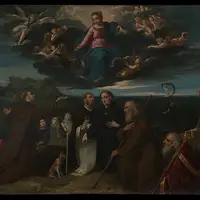
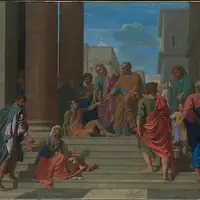




Ubaldo Gandolfi's painting shows a dramatic event: the execution of Saint John the Baptist. The central figure stands with a sword, which signifies his power and authority. He looks conflicted, indicating a deep emotional struggle. In contrast, Saint John lies on the ground, injured and vulnerable. The surrounding angels, who express sorrow, enhance the painting's emotional weight. The use of rich, vibrant colors creates a strong visual impact, which attracts the viewer’s attention. Gandolfi has used light to draw focus to the main figures, highlighting not only their significance but also reflecting the tension in the scene. This painting dates from around 1770 and is a classic example of late-Baroque art, a style known for its dramatic themes and emotional depth. It invites viewers to consider themes of sacrifice and the complexities of morality in human life. Ubaldo Gandolfi, who lived from 1728 to 1781, was a prominent Italian painter, draughtsman, and sculptor, mainly active in Bologna. His works often focused on biblical, mythological, and allegorical subjects, and he gained fame through the quality of his art. If you visit The Metropolitan Museum of Art in New York, you can see this masterpiece and appreciate its intricacies firsthand.
B1 · Intermediate · 198 words · ~1 min
Ubaldo Gandolfi · ca. 1770 · Oil on canvas · The Met
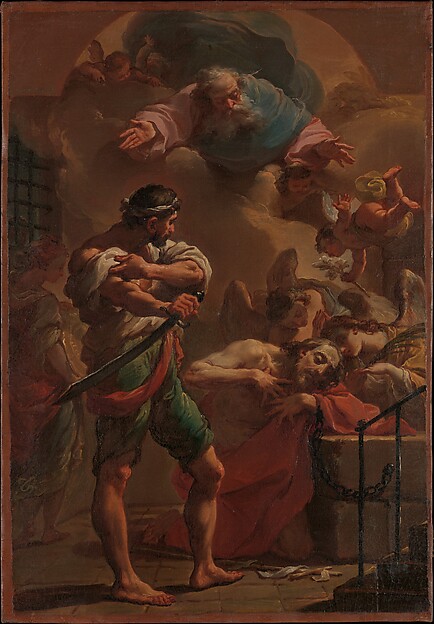
Understanding the Execution of Saint John the Baptist
Word notebook · B1
Tap a highlighted word in the text, or study the list below.
- conflicted
- having conflicting feelings or emotions; torn between different desires.
- sorrow
- a feeling of deep sadness, often due to loss or disappointment.
- intricacies
- the detailed and complex parts of something.
- allegorical
- representing ideas or principles by characters or events in a story.
- vulnerable
- capable of being harmed or hurt; weak.
- medium
- the material or method used by an artist to create their work.
- commission
- an order for a work of art, usually paying the artist for it.
Comprehension check · B1
Finished reading? See how much stuck.
1.What is the main theme of Gandolfi's painting?
2.Where can Gandolfi’s painting be seen?
3.What period is Gandolfi associated with?