









































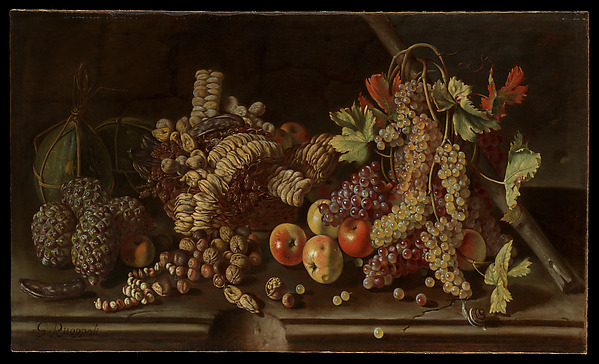
Giuseppe Ruoppolo's painting, created around 1660-69, features a rich and colorful display of fruit and nuts on a table. The artist has used oil paint to create vibrant colors that catch the viewer's attention. Grapes, apples, and other items, which include hazelnuts and figs, are arranged in a way that emphasizes their natural beauty. The light reflects off the surfaces of the fruit, making them appear fresh and inviting. This technique not only gives a sense of warmth to the work but also creates an atmosphere of life. Ruoppolo aims to capture the essence of nature, conveying a mood of tranquility and pleasure that the viewer can appreciate.
Still life paintings became popular during the Baroque period when artists focused on everyday objects and the details that make them significant. These works often highlight not just the beauty of the items but also their meaning. If viewers look closely, they may notice how this painting can reflect the abundance of life, symbolizing nourishment and fertility. The choice of fruit can suggest ideas about harvest and growth. Today, Ruoppolo’s work, which is part of The Metropolitan Museum of Art's collection in New York, continues to be admired for its skillful representation and rich symbolism, making it a valuable piece in art history.