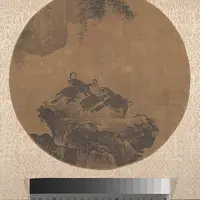



































In this painting titled 'Kingfisher', the artist Kano Tsunenobu presents a small kingfisher perched gracefully on a slender branch. The bright blue and green colors of the bird contrast beautifully with the light beige background, creating a sense of calm and harmony. The surrounding bamboo leaves are skillfully painted, which adds to the natural beauty of the scene. Tsunenobu has used thin lines and soft brushwork to enhance the delicate appearance of the bird. Since he is part of the Kanō school in Japan, which is known for its traditional themes of nature, he effectively captures the elegance of this little creature. The kingfisher itself symbolizes elegance and tranquility, making the painting a perfect example of Edo period art. This period, which lasted from 1615 to 1868, often celebrates the beauty of the natural world. Additionally, Tsunenobu became the head of the Kanō school in 1674, continuing a legacy of craftsmanship that focused on depicting animals and landscapes. This painting is one of a triptych of hanging scrolls, showcasing not only his skill but also the connection between art and nature. If viewers appreciate the painting, they may feel inspired to learn more about Edo period art and the artists who have worked within this unique tradition. Today, this artwork is part of the collection at The Metropolitan Museum of Art in New York, where many visitors can enjoy it every year.
B1 · Intermediate · 232 words · ~1 min
Kano Tsunenobu · · One of a triptych of hanging scrolls; ink and color on paper · The Met
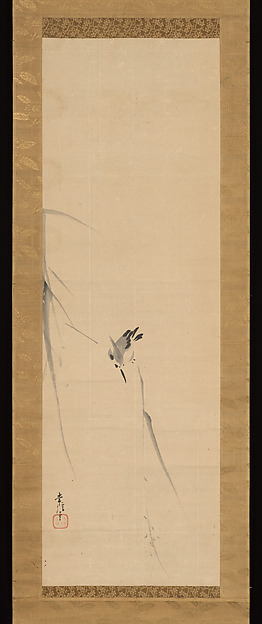
Kingfisher
Word notebook · B1
Tap a highlighted word in the text, or study the list below.
- triptych
- a set of three artworks that are side by side, usually related in theme.
- scroll
- a long piece of paper or cloth, rolled around a cylinder, used for writing or painting.
- symbolize
- to represent or show something through a symbol.
- craftsmanship
- the skill and quality shown in making something.
- legacy
- something handed down from the past, especially a tradition or heritage.
Comprehension check · B1
Finished reading? See how much stuck.
1.What colors does the kingfisher have in the painting?
2.Who did Tsunenobu study under?
3.What does the kingfisher symbolize in the painting?