




















'The Dance Class' is a painting created by Edgar Degas in 1874. This artwork shows many young dancers in a spacious green room, creating a lively atmosphere. The dancers, who are wearing white tutus, display their dedication to dance. Some dancers have flowers in their hair, which adds a touch of beauty to the scene. While some dancers focus on perfecting their movements, others are chatting amongst themselves, showing their youthful energy. In the background, a teacher, who holds a cane, watches the dancers closely, suggesting that he is guiding their practice and helping them improve. The use of bright light makes the scene feel energetic and full of life. Degas has captured not only the beauty of dance but also the hard work behind it. He is known for painting dancers and their experiences, which shows how they feel in the moment, reflecting both joy and effort. More than half of his works depict dancers, highlighting his fascination with this subject. Although Degas is often associated with Impressionism, he preferred to be known as a realist, focusing on modern life rather than outdoor scenes. His unique style and ability to portray emotion make his paintings, including 'The Dance Class', timeless representations of artistic skill and dedication.
B1 · Intermediate · 207 words · ~1 min
Edgar Degas · 1874 · Oil on canvas · The Met
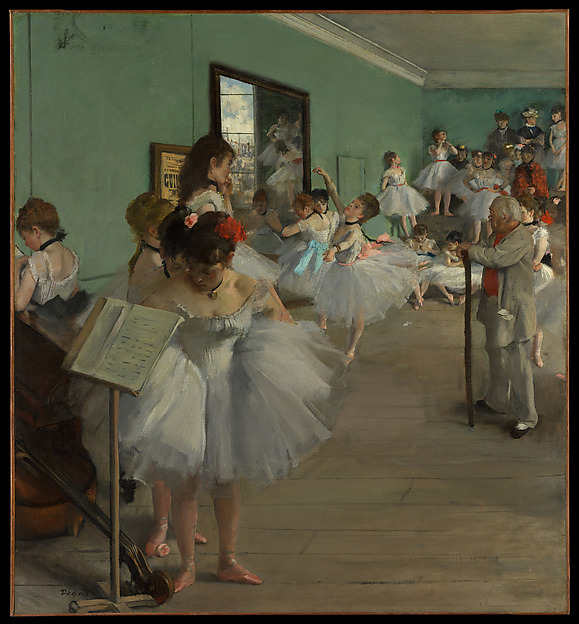
The Dance Class — Edgar Degas
Word notebook · B1
Tap a highlighted word in the text, or study the list below.
- dedication
- the quality of being committed to a task or purpose.
- atmosphere
- the mood or feeling of a place.
- youthful
- having the qualities of being young.
- fascination
- a very strong interest in something.
- timeless
- not affected by the passage of time; eternal.
- portray
- to depict or show someone or something in a particular way.
- emotional
- related to feelings and emotions.
Comprehension check · B1
Finished reading? See how much stuck.
1.What is the main subject of 'The Dance Class'?
2.Why does Degas use bright light in his painting?
3.How does Degas prefer to categorize his art style?