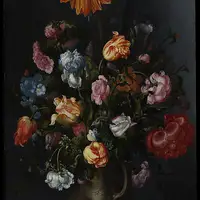













Bartolomeo Cavarozzi created the painting 'Grape Vines and Fruit, with Three Wagtails' around 1615 to 1618. This artwork is a fine example of still life, which highlights the beauty of natural elements in a very detailed way. The dark background allows the vivid colors of the grapes and fruit to shine beautifully. Cavarozzi has used low light to create a calm and peaceful atmosphere, inviting the viewer to reflect on the scene. The three wagtails, which are small birds, add a sense of life and movement to the still image. Their presence suggests the harmony of nature and life, strengthening the message of the painting. This artwork reflects the Baroque period's emphasis on realism, showcasing Cavarozzi’s careful attention to detail. The fruit appears ripe and inviting, symbolizing abundance and the richness of life. Viewers have admired this aspect since it evokes a sense of comfort and joy. Through these choices, Cavarozzi shows his skill as a painter who was influenced by Caravaggio, a master known for his dramatic use of light. The work also represents the beauty found in everyday objects, making it a timeless piece. Today, it resides in The Metropolitan Museum of Art in New York, where many art lovers have appreciated its beauty.
B1 · Intermediate · 206 words · ~1 min
Bartolomeo Cavarozzi · ca. 1615–18 · Oil on canvas · The Met
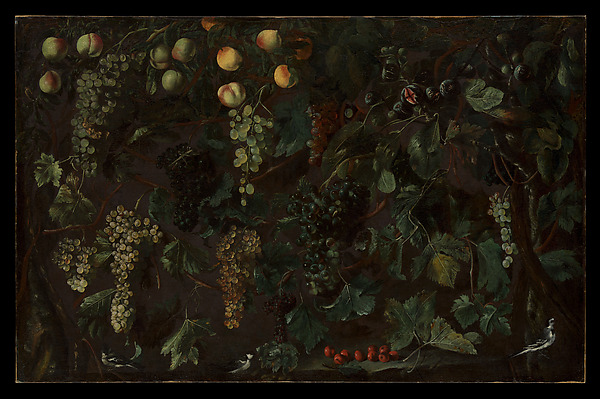
Interpretation of Grape Vines and Fruit
Word notebook · B1
Tap a highlighted word in the text, or study the list below.
- still life
- a type of painting that focuses on inanimate objects like fruit or flowers.
- atmosphere
- the feeling or mood created by the setting in art or literature.
- abundance
- a large quantity of something; in this case, the fruit represents plenty.
- realism
- an artistic style that aims to represent subjects as they appear in everyday life.
- harmony
- a pleasing arrangement of different parts, which gives a sense of unity.
Comprehension check · B1
Finished reading? See how much stuck.
1.What are the three wagtails doing in the painting?
2.Who was the artist influenced by Cavarozzi?
3.Where can the painting be seen today?