
















































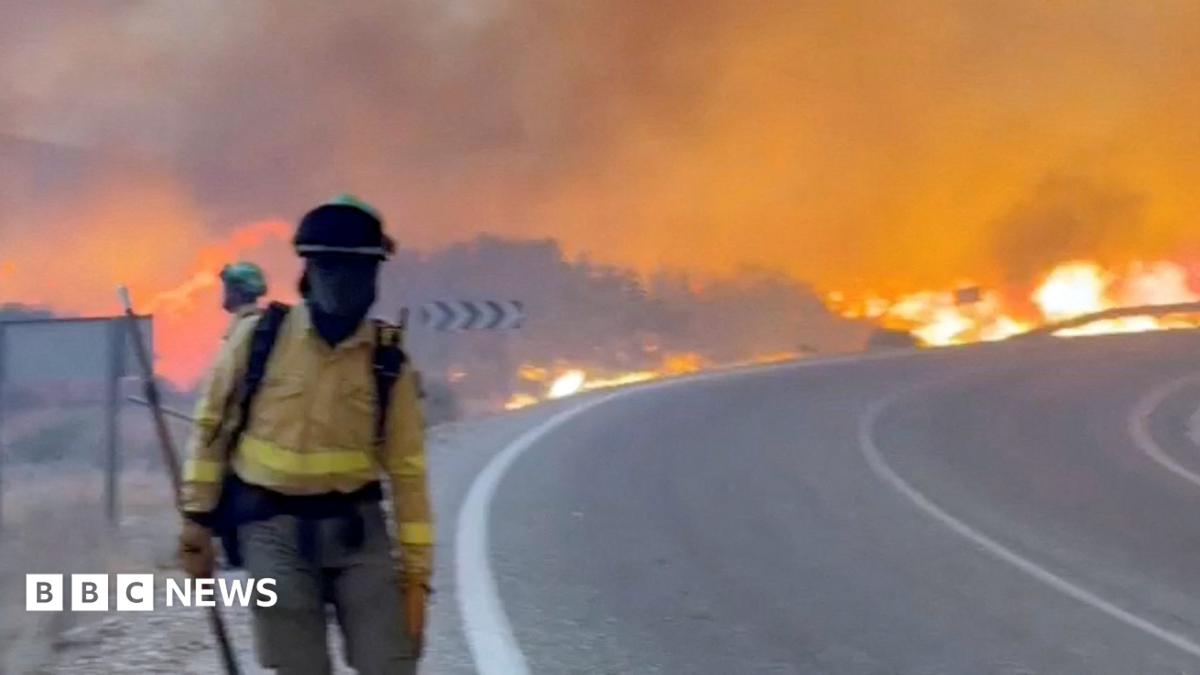
Recently, there has been a major wildfire in southern Spain, which has led to the tragic loss of at least 11 lives. The regional leader of Andalusia, Juanma Moreno, has stated that 19 other people are missing. Early reports indicate that four of the victims were British citizens. The wildfire has been fueled by a downed power line, which caused the flames to spread rapidly through the woods near Los Gallardos in Almería. This summer, Spain is experiencing a severe heatwave, with temperatures reaching around 40 degrees Celsius (104 degrees Fahrenheit). This intense heat has caused many wildfires across southern Europe, affecting countries like France and Portugal as well. The emergency services have evacuated around 1,000 residents from their homes to ensure their safety. Unfortunately, some people have suffered injuries due to the fire and smoke. One individual required hospitalization due to smoke inhalation, and others have sustained burns. The local government is worried that the number of casualties may rise in the coming days. Experts have warned that climate change is making wildfires more frequent and severe in Europe. If this trend continues, we may see even more devastating fires in the future. In recent years, wildfires have burned vast areas, with last year witnessing a record 393,000 hectares burned in Spain alone. This worsening situation poses a significant threat to lives and property, and many communities are at risk, leading to urgent discussions on how to improve emergency response efforts and address climate change more effectively. The future of firefighting strategies will need to focus on better prevention measures and increased resources to combat these disasters.
B1 · Intermediate · 268 words · ~2 min
Word notebook · B1
Tap a highlighted word in the text, or study the list below.
- heatwave
- a prolonged period of excessively hot weather