




























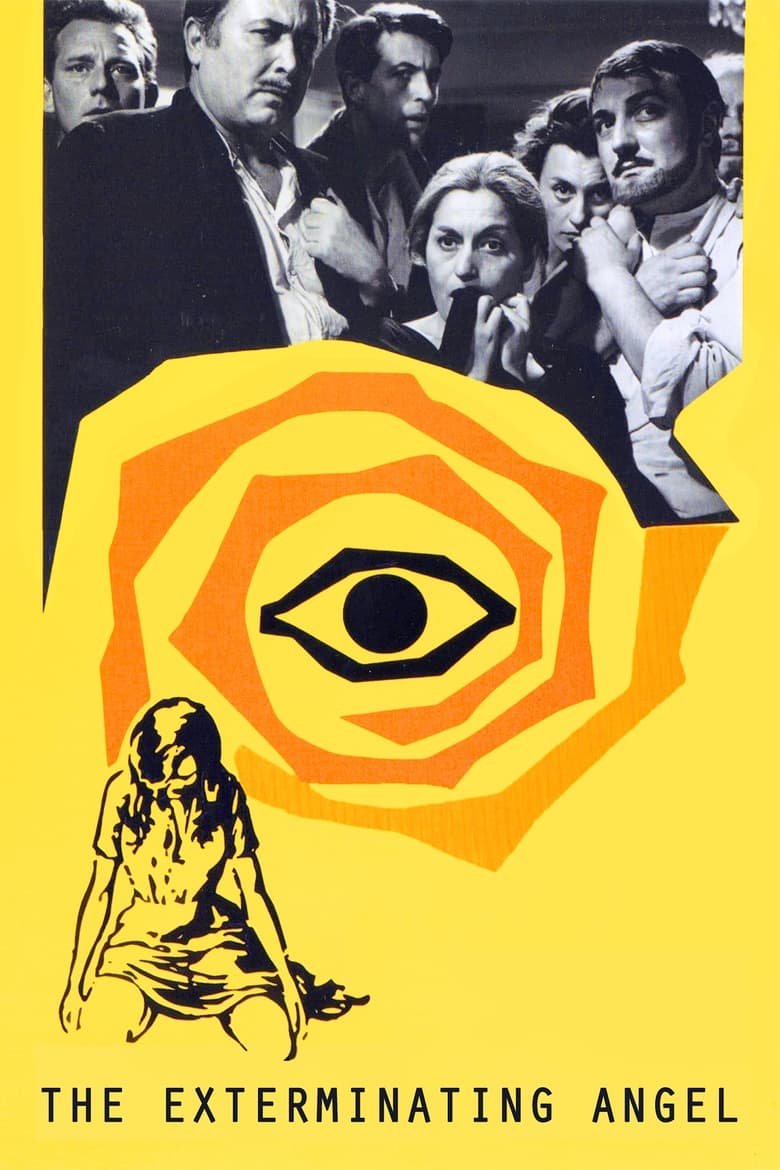
The Exterminating Angel is a Mexican film from 1962, directed by the famous filmmaker Luis Buñuel. The story begins with a lavish dinner party hosted by wealthy friends, who have gathered to enjoy good food and conversation. After they finish their meal, the guests find they cannot leave the dining room for reasons that remain unclear. This leads to unexpected chaos and confusion. Over time, the guests’ polite behaviors and elaborate societal pretenses begin to deteriorate, and they reveal their inner fears and primal instincts as they confront their confinement. They start to act more like animals, demonstrating how quickly civilization can break down under pressure.
The film explores significant themes such as social class, isolation, and the hidden savagery within high society. The guests’ experiences reflect the hypocrisy of the elite, revealing their darker sides as they struggle to maintain control. The mixture of humor and horror in the story keeps the audience engaged while provoking deeper thought. Buñuel’s visual style is striking, with strong contrasts of light that emphasize the film’s unsettling nature.
This film has influenced modern horror movies, making it an important cultural work in cinema history. Critics have noted its relevance to contemporary society, suggesting that the themes of madness, isolation, and social breakdown are still pertinent today. In fact, in 2004, The New York Times included The Exterminating Angel in a list of "The Best 1,000 Movies Ever Made," highlighting its cultural significance.